where the cut knife waters flow, book cover edited
Archives, Our Stories

The Gold Mine for Family Historians

An ever-increasing number of people are taking a deep-dive into their family histories: constructing their family trees and searching out the stories that give their ancestors’ lives context. Archives are the building blocks for these projects; they are the treasure troves containing the chests of gold.

The Family Tree is mapped out through the use of vital statistics. Birth records, death certificates, enlistment papers, shipโ€™s manifests, baptism certificates, obituaries, etc. are used to identify an individualโ€™s ancestors. Secondly, stories from newspapers, local and oral histories, archival records, etc. are used to place people within the context of their times. 

Clayton McLain Memorial Museum | Family Histories

Today, so much of the information necessary to fill-in-the-blanks of a family tree or to discover the context of a life once-lived is available online. Archives, large and small, are digitizing historical records, putting the files online, even providing forms to request copies of particular documents. For SK Archives Week 2015, the CMMM introduced three Genealogy Resource pages on our website, which were updated in late 2021, and combined to form the current Genealogy Links page.

Additional archival resources can be found at:

  • Saskatchewan Historical Newspapers Online (SHNO) project which includes the Cut Knife Journal and the Cut Knife Grinder. Some early copies have suffered damage, others have pages missing but they are always worth a look. (Click to view.)
  • Local Histories (i.e. Where the Cut Knife Waters Flow Volumes I and II) are difficult to come by. Most are out-of-print, although the odd one may occasionally pop up for sale but often, at quite a price. Some can be found at local museums and archives, and some, the lucky few, can be found in digital collections. For example, Time Marches On : a history of the Alfred, Formby, Wardenville and Wembley School Districts is available to read online at the University of Calgary’s Digital Collections Library. Finding a digital version of a local history relevant to your research is another gold mine.

Back in the day, a researcher would often have to travel to individual archives to access their materials. Now, a huge array of resources, from around the world, have a home online. Visit CMMM’s Genealogy Links to be amazed…

~ Debbie M.
Fundraiser, Museum

What are Local Histories?

In 1980, the East Cut Knife and Districts Historical Society published a local history book titled, “Where the Cut Knife Waters Flow”. It was a collection of submissions researched and compiled for Celebrate Saskatchewan 1980 and dedicated “to the memory of the pioneers who settled in the area.” Written by ordinary people who lived locally, the book gives us the stories of the area’s settlers in their own voices.

The value of Saskatchewan local histories, and local histories in general, is well recognized. The Saskatchewan Legislative Library tries to obtain a copy of each new Saskatchewan local history book when it’s published. The Provincial Archives of Saskatchewan has more than 400 local histories in their collection. One historian sees the role of local history writers as the “gatekeepers and custodians of rich historicalย resources“. Most genealogists consider these books to be a goldmine for, among other reasons, family trees.

quilt
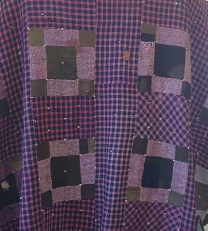
First Day of School Dress

On July 17th, the Museum hosted a Quilt Walk, and for a few weeks afterwards, I posted photos / descriptions of the quilts on our blog. One post in particular caught the eye of someone born in Cut Knife, now living in B.C. Lorraine Martin brought it to our attention that The First Day of School Dress was not created by Mary Duvall, but by Mary (MacMillan) Rutley for her daughter Jessie Rutley Vance. Her proof was the family tree in her own book, Notes and Clippings, It All Started in Saskatchewan. We’re thankful the record has been corrected.


LOCAL HISTORIES IN THE GIFT SHOP

Notes and Clippings, It All Started in Saskatchewan by Lorraine Martin

My story starts with my early life in the Gallivan / Cut Knife area in the early 1940s and 1950s. It continues through my training as a Psychiatric Nurse at the North Battleford Provincial Hospital then after graduation my working years in England and Switzerland…

Lorraine Martin

Odds and Ends: Autobiography by Orval Ens

Contents include the following chapters: My Forebears; From 0 – 80; School Daze; My Teaching Career; From Horse and Buggy to Automobile; The Terrible Blizzard of December 1955; Breath of French Air…

Orval Ens

Prairie Christmas: A Collection of Stories and Recollections, A Clayton McLain Memorial Museum Project Cut Knife, Saskatchewan 2006 โ€“ 2007

This delightful compilation of Christmas stories was compiled by a group of volunteers to not only document history, but to be a fundraiser for the Clayton McLain Memorial Museum… We invited people to write stories about their Christmas memories…

The Prairie Christmas Committee

Where the Cut Knife Waters Flow Volume II

100 Years Celebrating Saskatchewan’s Centennial 1905 – 2005

Where the Cut Knife Waters Flow Volume II

Click for more info about these in-stock local history books, and how to make a purchase from the Gift Shop.

~ Debbie M.