1915 wedding dress England
Archives, Museum, Our Stories

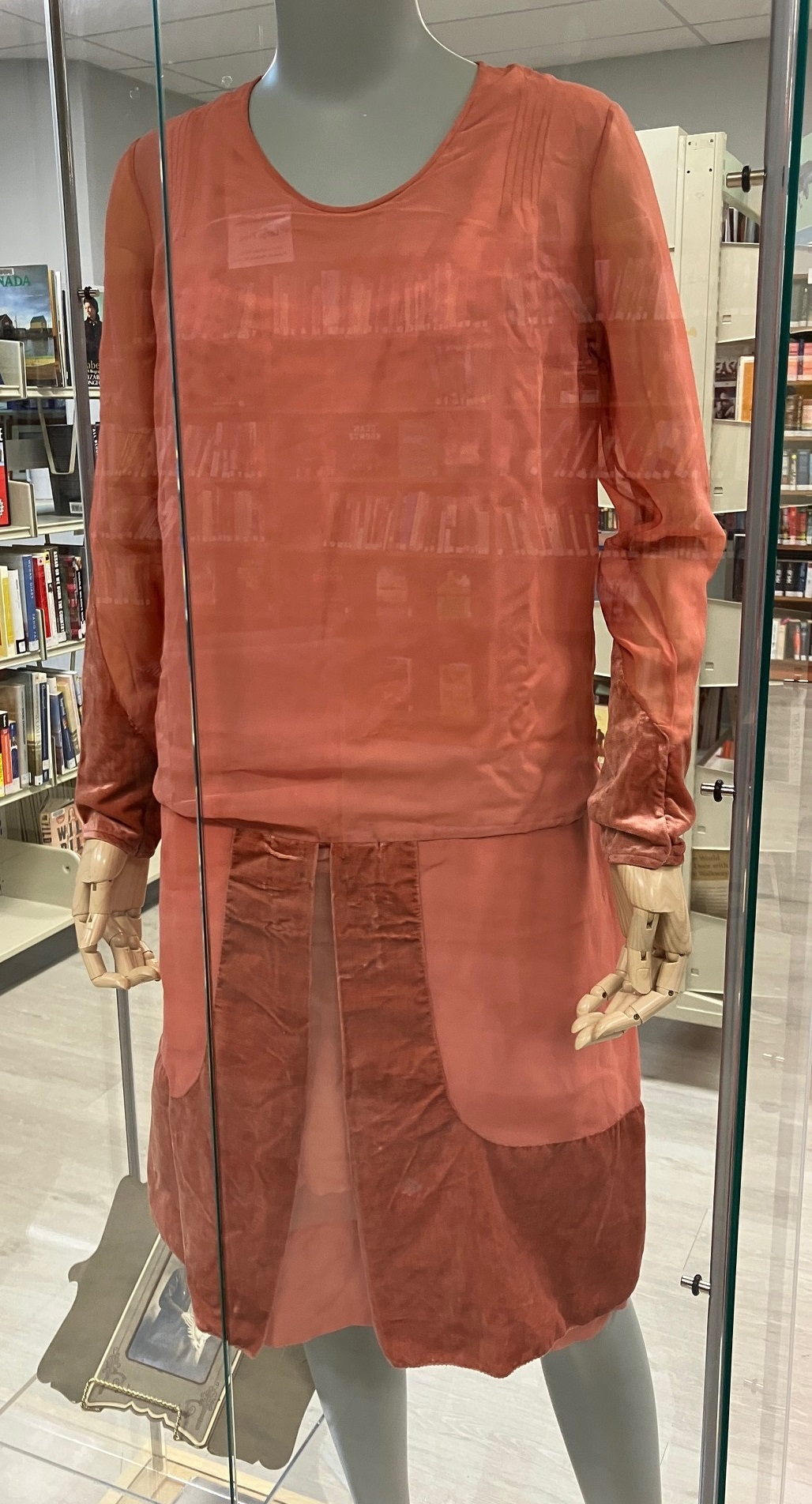
1915 Wedding Dress

Currently on display at the Cut Knife Library (113 Broad Street):

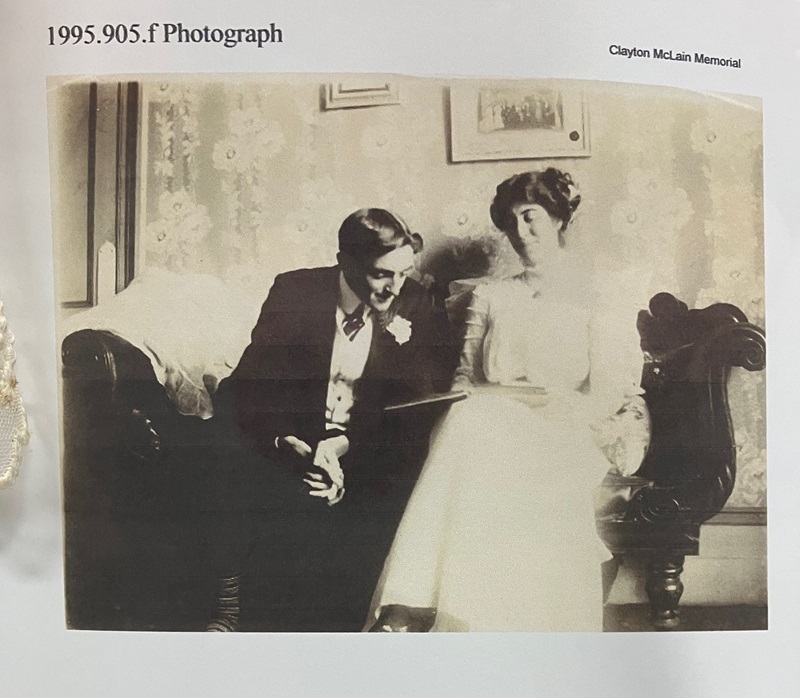
Stanley & Winnifred Powell, 1915

Winnifred (Turner) Powell married Stanley Turner on March 19, 1915 in England. Stan returned to Saskatchewan with his bride where they lived north of Cut Knife in the Wembley district.

Cream coloured satin two piece wedding dress; hand sewn and stitched.

~ Debbie M.

various ephemera on display at the cut knife library
Archives, Our Stories

Ephemera

ON DISPLAY AT THE CUT KNIFE LIBRARY

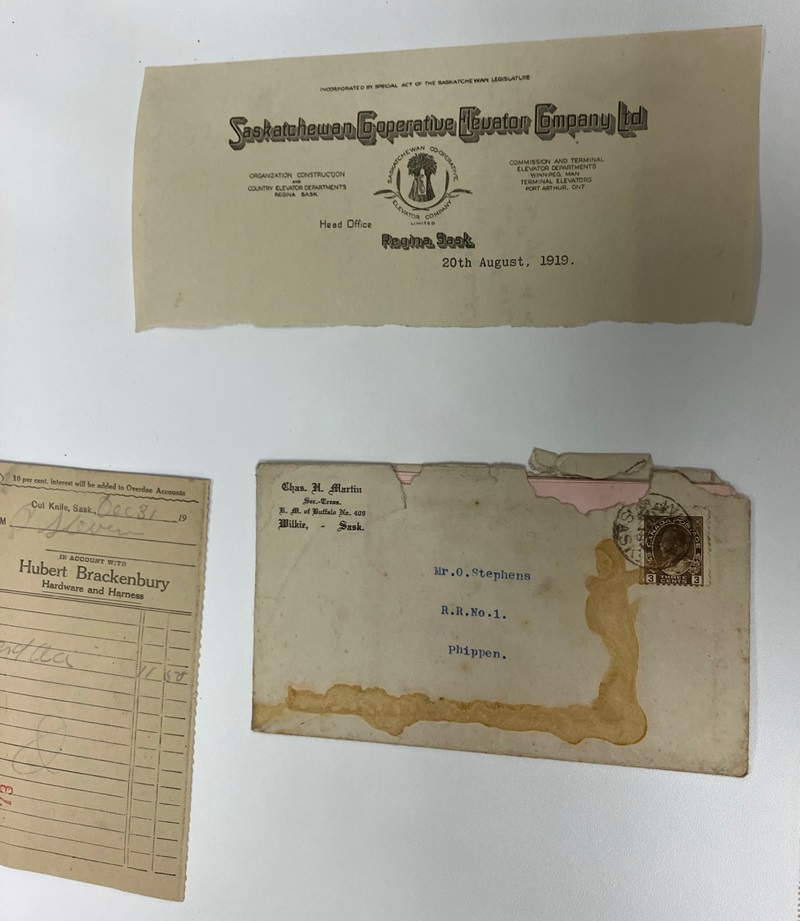
Ephemera are items which were not originally designed to be retained or preserved, but have been collected or retained… “the minor transient documents of everyday life”. Ephemera are often paper-based, printed items, including menus, ticket stubs, newspapers, postcards, posters, sheet music, stickers, and greeting cards.

from Wikipedia

From the current display in the Cut Knife Library
various ephemera on display at the cut knife library
From the current display in the Cut Knife Library

~ Debbie M.

Marriage photo 1928, Ovide and Hughenna (Rutley) Bertrand
Archives, Museum, Our Stories

1928 Wedding Attire

Currently on display at the Cut Knife Library (113 Broad Street):

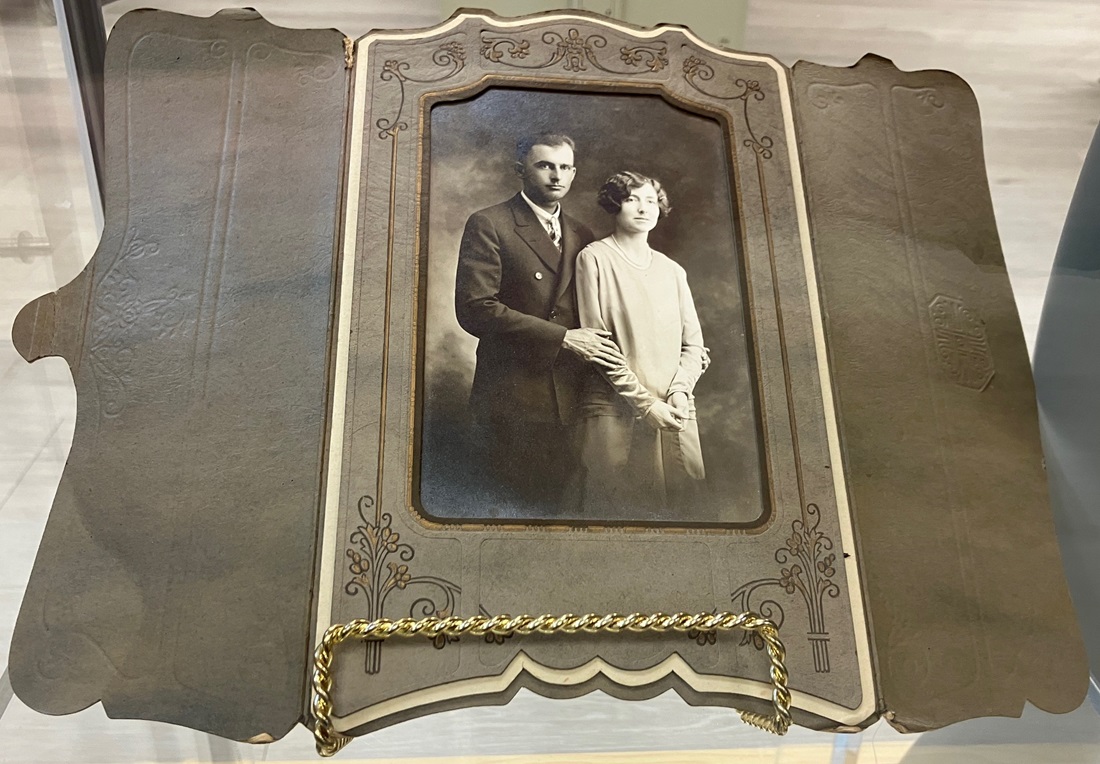
Ovide & Hughenna Bertrand on their wedding day

This outfit was worn by Hughenna Rutley at her marriage to Ovide Bertrand, August 8, 1928. Their children: Mary, Clare, Evelyn, Lorraine, Arthur, David, and Lucille.

Worn by Hughenna (Rutley) Bertrand, August 8, 1928

~ Debbie M.

Royal Bank calendar 1963
Archives, Museum, Our Stories

Calendars for a New Year

“SPONSORED CONTENT” BELOW

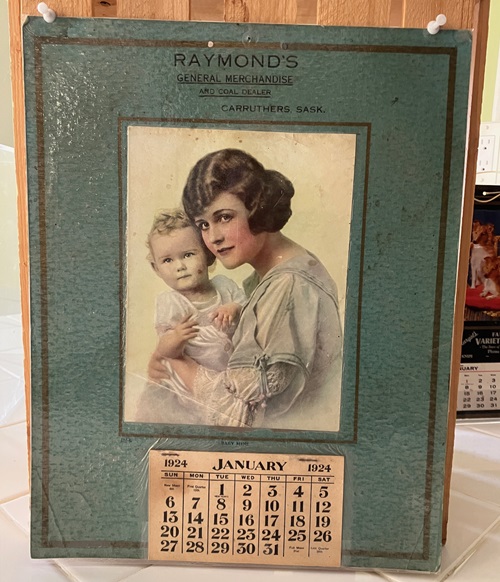
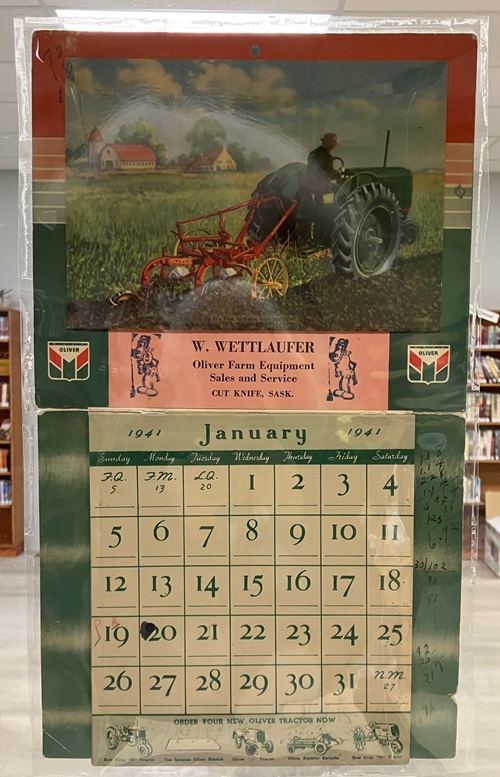
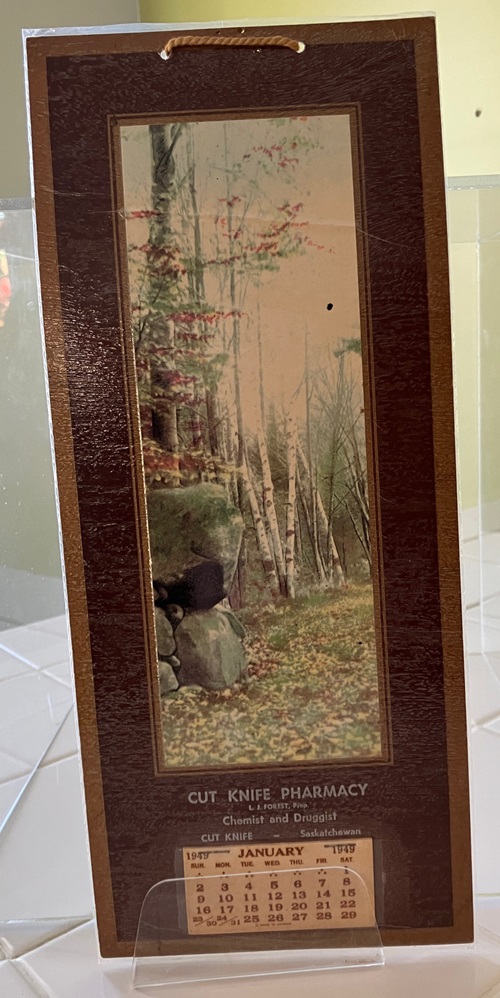
CMMM’s current display in the Cut Knife Library features vintage calendars from former area businesses and from a few companies still operating today. Years represented range from the mid-1920’s to the late-1970’s. As marketing materials and as customer appreciation items, these sponsored calendars were a useful tool for families and also provided easily accessible contact information. Many also featured beautiful art work, photography and / or typesetting. Here are a few examples.

Raymond’s General Merchandise & Coal Dealer, Carruthers, 1924

W. Wettlaufer, Oliver Farm Equipment Sales & Service, Cut Knife, 1941

Cut Knife Pharmacy, L. I. Forest, Prop, Chemist & Druggist, 1949

Elgar Coffee Bar, Home Cooked Meals, Cut Knife, 1962

Jack Parkinson & Family, Your Imperial Oil Agent, Cut Knife, 1978

These calendars and in fact, all of our Library exhibits, are best viewed in person as the overhead lighting and the limitations of the glass cases make for poor photos. To browse the complete exhibit which includes another dozen calendars, visit 113 Broad Street.

~ Debbie M.

Raymond's Store counter
Archives, Museum, Our Stories

Mom’s China, Dad’s Calendars, Your…

Every so often, following a Board meeting, we’ll stay behind to discuss the latest items on offer to the CMMM. Acquisitions meetings determine whether or not the Museum will accept or decline an artefact or the archival materials about which we’ve been contacted. Guidelines are in place to help make decision-making easier…

Our display space, our storage space and our volunteer resources are limited. By following our Significance Worksheet, we eliminate duplication and we maintain the museumโ€™s focus on the stories directly relevant to the area… we work at creating a unique, manageable collection reflective of the people, events and history of the Cut Knife area.

Acquisitions: To Accept a Donation . . . or Not?

… but it’s never really easy. One night after the accept / decline process we chatted on afterwards about having to make these decisions in our personal lives about our own parents’ possessions and collections:

  • How do you refuse your Mom’s table settings when she asks if you will take them?
  • What do you do if you end up, anyway, with multiple sets of china, or silverware, or crystal glassware after she passes?
  • Do you have a place to display, or even to store your Dad’s collection of carved wooden decoys, or license plates, or calendars?
  • How do you let something go that meant so much to them, and holds so many memories for you? What will happen to it if you don’t keep it?

These are the same kinds of questions the Museum struggles with too, each time we review an artefact. We want to be able to preserve the item, to display it, and to share it, not simply to store it.


Sadly, this Trustee had the final word that night. She was describing the conversation she had had with her daughter, when she asked if she’d take home her Grandmother’s set of silver. Her daughter reacted with “What am I going to do with a set of silver?” Her mom replied, “You can do exactly what I do with it. You take it out once a year. You polish it. Then you put it back until next year.”

~ Debbie M.