Friday, July 31, 2015 from 2 – 4 p.m.
Friday, August 21, 2015 from 2 – 4 p.m.
In the Duvall House, onsite at the Museum at 101 Hill Avenue, Cut Knife, SK
For more details, please view the Poster here.
Friday, July 31, 2015 from 2 – 4 p.m.
Friday, August 21, 2015 from 2 – 4 p.m.
In the Duvall House, onsite at the Museum at 101 Hill Avenue, Cut Knife, SK
For more details, please view the Poster here.
Outdoor Tipi Extravaganza
Thursday, July 30, 2015
Ponds and The Making
Thursday, August 20, 2015
Onsite at the Museum | 101 Hill Avenue, Cut Knife, SK
If you have ANY QUESTIONS or TO REGISTER call: Clayton McLain Memorial Museum – 1(306)398-2345. Open: Wednesday – Sunday — 8:00am – 5:00pm
For more details, view the poster here.

The Cut Knife Cemetery, like so many others in Saskatchewan, is over one hundred years old and, meandering through on a Sunday afternoon, it is easy to recognize the older graves. Lettering has eroded on many of the softer marble stones and names and dates on others have filled with mosses and lichens, both of which make the inscriptions difficult to read and the graves to identify. A few headstones have broken, a few plots have remained unmarked for reasons unknown. Perhaps, there are records that can fill in the gaps, perhaps not.

Cemetery records everywhere, especially the older ones, are notorious for being lost, or damaged, or destroyed in fire and flood. This makes it especially difficult for families who are searching, at a distance, for an ancestor. A grave connects a person to a place and provides a context; a grave marker records vital statistics. Sometimes, a marker can also shed light on a personality through the choice of epitaph, the presence of religious or association symbols, nicknames, etc. When both records are no longer accessible, a vital piece of family history is lost.

Many rural cemeteries are cared for by volunteers and are just not in a position, financially, to undertake large restoration projects. In addition, the volunteer hours required to clean, photograph and annotate a whole cemetery of headstones is probably not realistic, either. Maybe, a simpler approach would work . . . providing online accessibility to researchers. . . 24/7?
CanadianHeadstones.com is a volunteer-driven, not-for-profit organization that archives photos and text of cemetery grave markers submitted by individuals or cemetery committees. The CMMM has listed it on our Family Histories page as a genealogy resource. The Cut Knife Cemetery and the Carruthers Cemetery are already represented online with a number of photos to view for each.
The next time you’re wandering through your local cemetery with your phone or digital camera, consider digitizing your family’s headstones and sharing them online with those who may be searching for them. In all probability, if any part of the headstone is illegible, you or a family member would have the knowledge needed to record the correct information.
~ Debbie M.

On March 17, 2015, the Cut Knife Chamber of Commerce dissolved. The organization had been a part of the Town since, at least, the 1970s and had hosted some well loved community traditions including the May Long Weekend Garage Sale, Oktoberfest and the Canada Day Pancake Breakfast at the Museum. However, now that it had disbanded, the question arose: What was to become of its records?
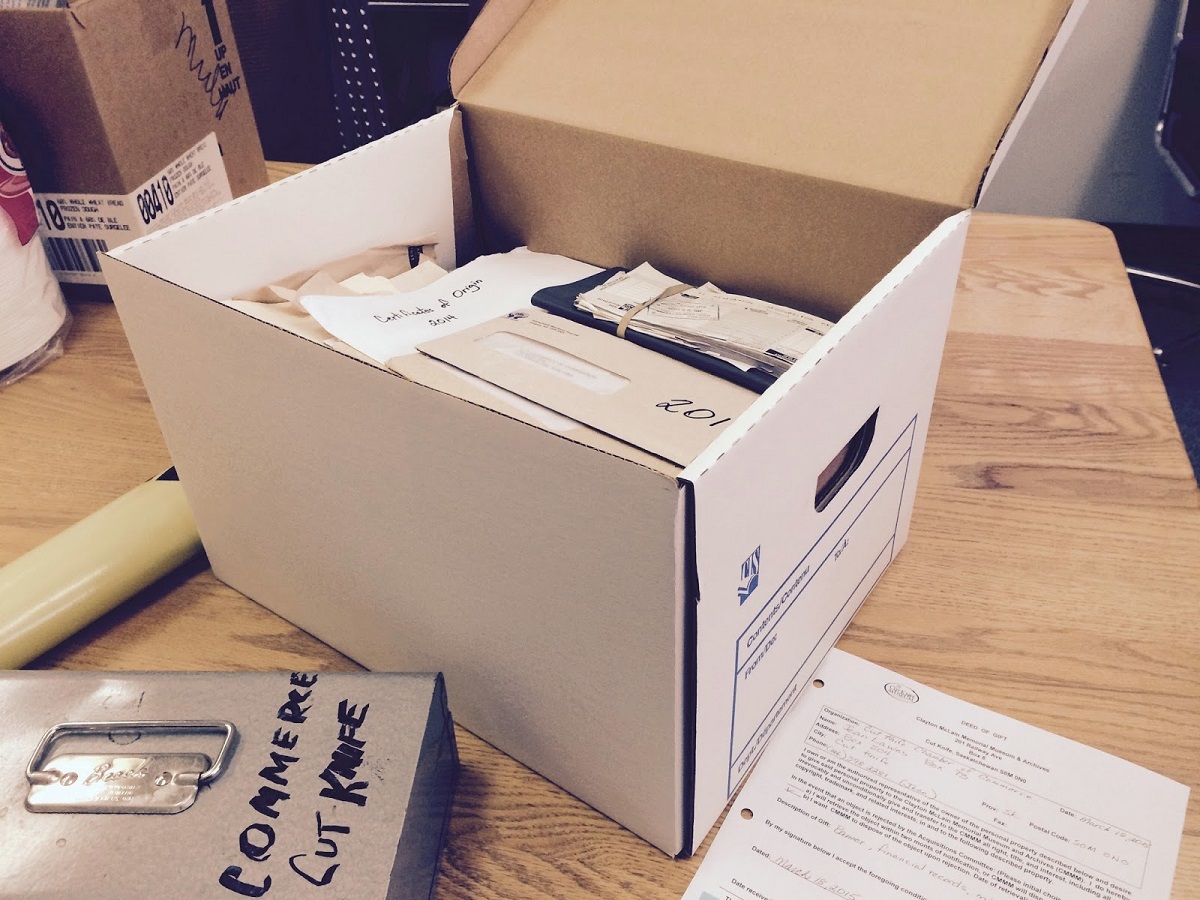
The Clayton McLain Memorial Museum and Archives has established a set of guidelines that helps us to determine whether, or not, a potential donation fits our mandate. These criteria were designed to keep us on track. Our display space, our storage space and our volunteer resources are limited. By following our Significance Worksheet, we eliminate duplication and we maintain the museum’s focus on the stories directly relevant to the area.
Honestly, if it were up to the individuals of the Acquisitions Committee and the Board of Trustees, we’d probably take in everything that was offered to the Museum. Most of us have a weakness for collections, for antiques, for documents and books or for items of a sentimental nature but that approach is unworkable. So, we’ve set up a procedural based upon what other museums are doing and we work at creating a unique, manageable collection reflective of the people, events and history of the Cut Knife area.

The records of the Cut Knife Chamber of Commerce will be accepted into the Archives because they fit – to a tee – the requirement for historical significance: “. . . collection [that] contributes to changing the course of local history or [has] an impact on development of community.” The boxes of materials will be processed and, in time, will be available to the public for viewing or research.
~ Debbie M.
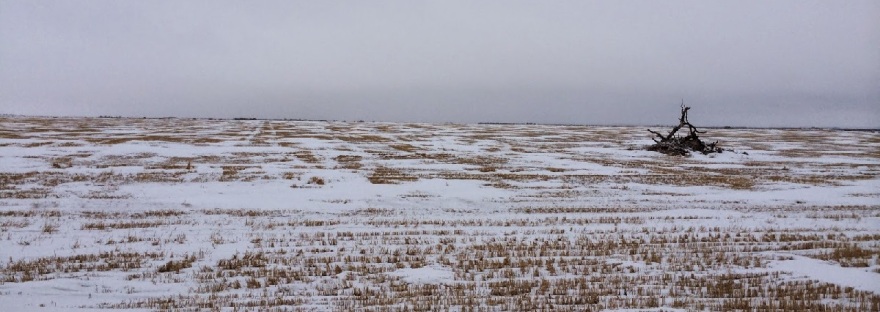
Homesteading in the early 20th century, on the wind-whipped stretches of prairie was no easy task for new immigrants. Often, they knew little about farming and, even if they had experience working the land, surviving a Saskatchewan winter would still be a bitter struggle. Much of their success would depend upon how well they were able to make preparations before the cold weather hit.
First shelters were often considered temporary, constructed quickly with whatever materials a settler could afford or could find on the land. Tents and caves, sod or tar paper shacks were common, replaced by log, frame or stone houses as the homesteader’s fortunes improved. Severe weather events like droughts, floods and cyclones were widespread as were their consequences – fire, insects, mud, and hailstones.
Winter would be the worst. Blizzards with extreme temperatures and wind chills, little visibility and drifting snow could shut down an entire area. A settler needed a supply of food and firewood to survive until the roads were passable, again. He would need wool blankets and quilts, lamp fuel and something to occupy the long days of solitude and isolation.
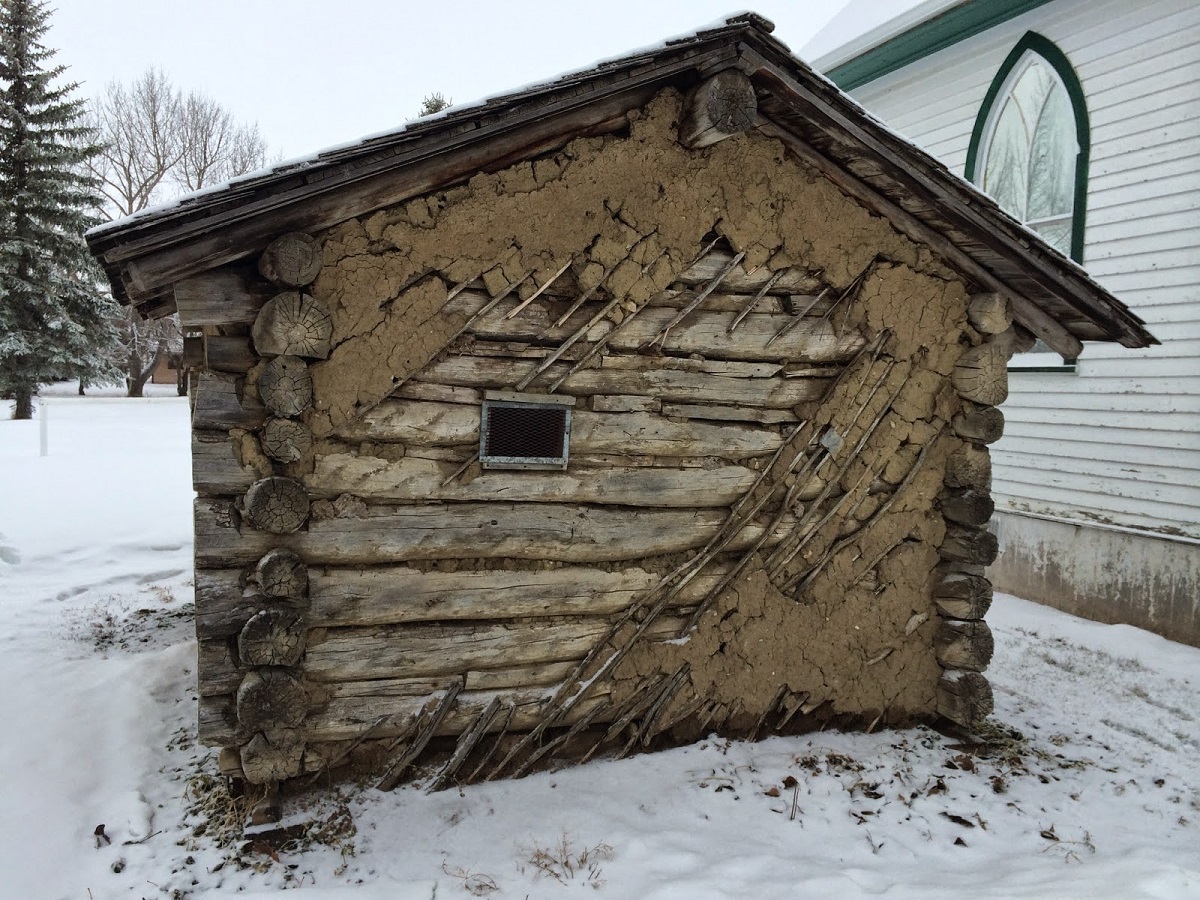
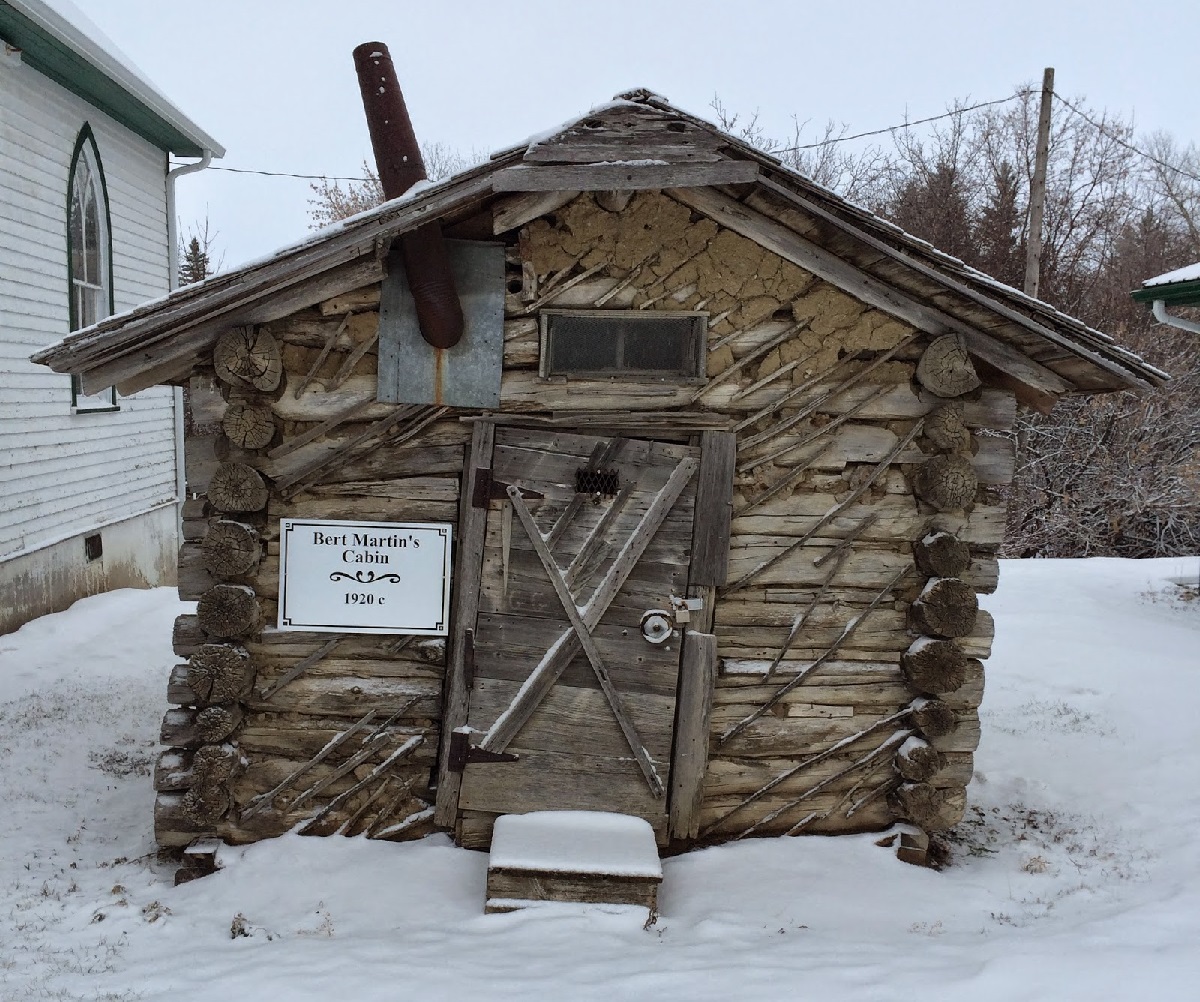
Imagine living in a shelter like Bert Martin’s: A log cabin, plastered with mud to keep out the wind, a small wood stove for heat and a few small, windows to let in the weak winter sun. There’s a dirt floor, a single bed, a table and chair, a few pictures to decorate the walls but it’s a simple dwelling. Could you imagine living like that for a year or two? It’s humbling to think about how many homesteaders did.
~ Debbie M.
 Clayton McLain Memorial Museum